On the rites practiced by the Most-Holy Church
article by Sebastian
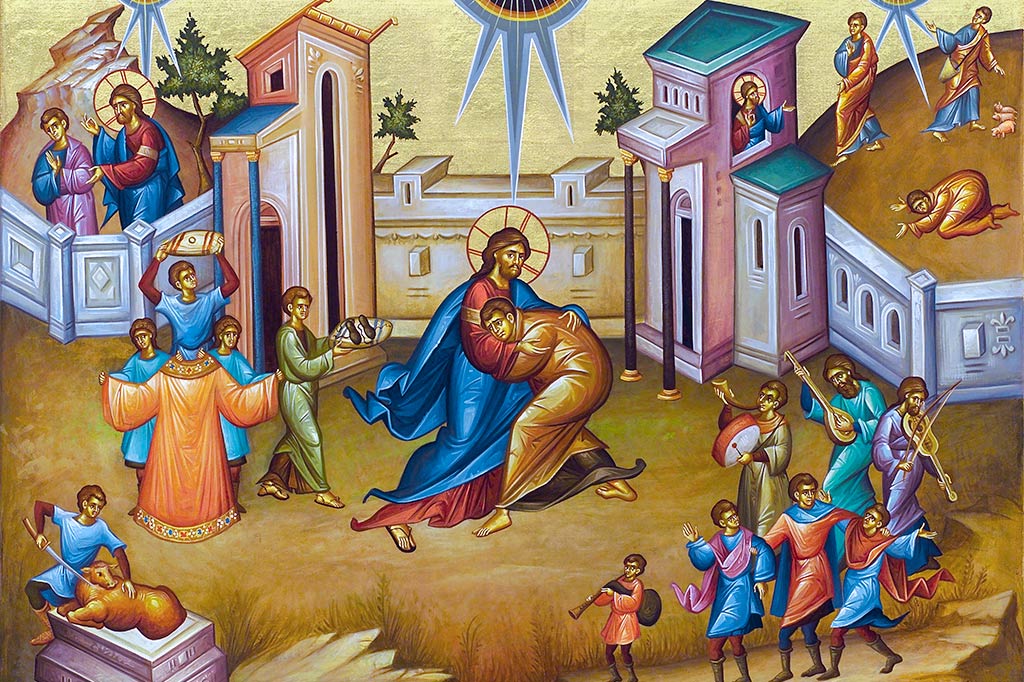 |
| Prodigal son. |
Preface
The purpose of this article is mainly aimed towards making evident two facts that some people usually ignore or if they know them are against: 1. That in the Church there's a multiplicity of rites; 2. That it is not exclusive to the West pre-schism but also the East.
On the rites of the Church and local usages
It should surprise no one that in the Church there's a diversity of rites, they have evolved differently depending on the region, time and culture, having each customs of their own, that despite their differences, constitute an integral part of the Church. It is not as some have argued in debates that these rites divide as there is "uniformity", rather it is the case that uniformity is a modern exception to the norm that was the Church not so long ago.
Nowadays it is famous the saying of St. Ambrose of Milan:
"When I go to Rome, I fast on Saturday, but here [Milan] I do not. Do you also follow the custom of whatever church you attend, if you do not want to give or receive scandal" (Letter LIV to Januarius, St. Augustine of Hippo).
It cannot be argued that the standard of the Imperial rite (that is, the rite of St. John Chrysostom as practiced in the Hagia Sophia in Constantinople) was always this way in the East, nor that it is the standard today. In the East one can see four different rites in usage, alongside with two local usages of some of those rites. The aforementioned rites are the following:
- The Liturgy of Saint John Chrysostom.
- Use of the Edinoveries (Old Believers).
- The Liturgy of Saint Basil the Great.
- The Liturgy of Presanctified Gifts (attributed to Saint Gregory the Great "Dialogus").
- The Liturgy of Saint James.
- Use of the Greeks.
- Use of the Russians.
"Augustine's third question: Since there is but one faith, why are the uses of Churches so different, one use of Mass being observed in the Roman Church, and another in the Churches of Gaul?
Answer of the blessed Pope Gregory: Your Fraternity knows the use of the Roman Church, in which you have been nurtured. But I approve of your selecting carefully anything you have found that may be more pleasing to Almighty God, whether in the Roman Church or that of Gaul, or in any Church whatever, and introducing in the Church of the Angli, which is as yet new in the faith, by a special institution, what you have been able to collect from many Churches. For we ought not to love things for places, but places for things. Wherefore choose from each several Church such things as are pious, religious, and right, and, collecting them as it were into a bundle, plant them in the minds of the Angli for their use" (Registrum Epistolarum, Book Xi, Letter LXIV).
For it was proper in these times to import usages from other rites into another for the benefit of the souls of the laity, and this was not exclusive to the church of the English, it also happened to the church of the Iberian peninsula, for the canons of the Third Council of Toledo decree the following:
"Credo secundum formam orientalium ecclesiarum ([To recite the] Creed according to the form of the eastern church)".
And it is not as some argue that there were heresies inserted in this council, for the Filioque is not present in many manuscripts according to scholars, but it came to be later on, albeit it's true that it was present in the writings of St. Isidore of Seville who presided the Fourth Council, it is not certain whether there were interpolations, or rather he held to the filioque as expressed by St. Maximos the Confessor, such mysteries are intriguing but not the topic of this post.
Going back on topic, there were also a multiplicity of rites in the East, some of Western origin until very late XVIIth Century. Such is the case of the little known but interesting Liturgy attributed to St. Peter that was popular in Medieval Russia, and it is believed by some to have been originally in use at Mount Athos; this liturgy has several parts from the Roman rite (albeit in a Byzantinised form), some others from the Liturgy of St. John Chrysostom and the rest from the Liturgy of St. James, it also includes the well-known prayer that goes by:
"Agnus Dei, qui tollis peccatta mundi, miserere nobis".
Looking now at the consecration of the Eucharist, in both rites, that of St. John Chrysostom and the Roman Mass happen at the same time, that is, the Epiclesis, albeit in the Roman mass the prayer goes in this way:
"Súpplices te rogámus, omnípotens Deus, iube hæc perférri per manus sancti Angeli tui in sublíme altáre tuum, in conspéctu divínæ maiestátis tuæ; ut, quotquot ex hac altáris participatióne sacrosánctum Fílii tui Corpus et Sánguinem sumpsérimus, omni benedictióne cælésti et grátia repleámur. (We humbly beseech thee Almighty God command that these offerings be carried by the hands of thy Angel to thy altar on high before the offerings may be carried up)".
The mission of the Western Rite


Comments
Post a Comment
Please comment with Christian spirit in charity and humility. Thank you and God bless!